The future of digital design isn’t about crafting perfect screens, it’s about building intelligent systems that create the right interface at the right moment.
With AI-augmented design and Generative UI (Gen UI), design moves from static deliverables to adaptive experiences powered by context, behavior, and intent. Combined with Text-to-UI workflows and bold, expressive aesthetics, this approach is reshaping how products are imagined and built.
expressive aesthetics, this approach is reshaping how products are imagined and built.
What Is AI-Augmented Design?
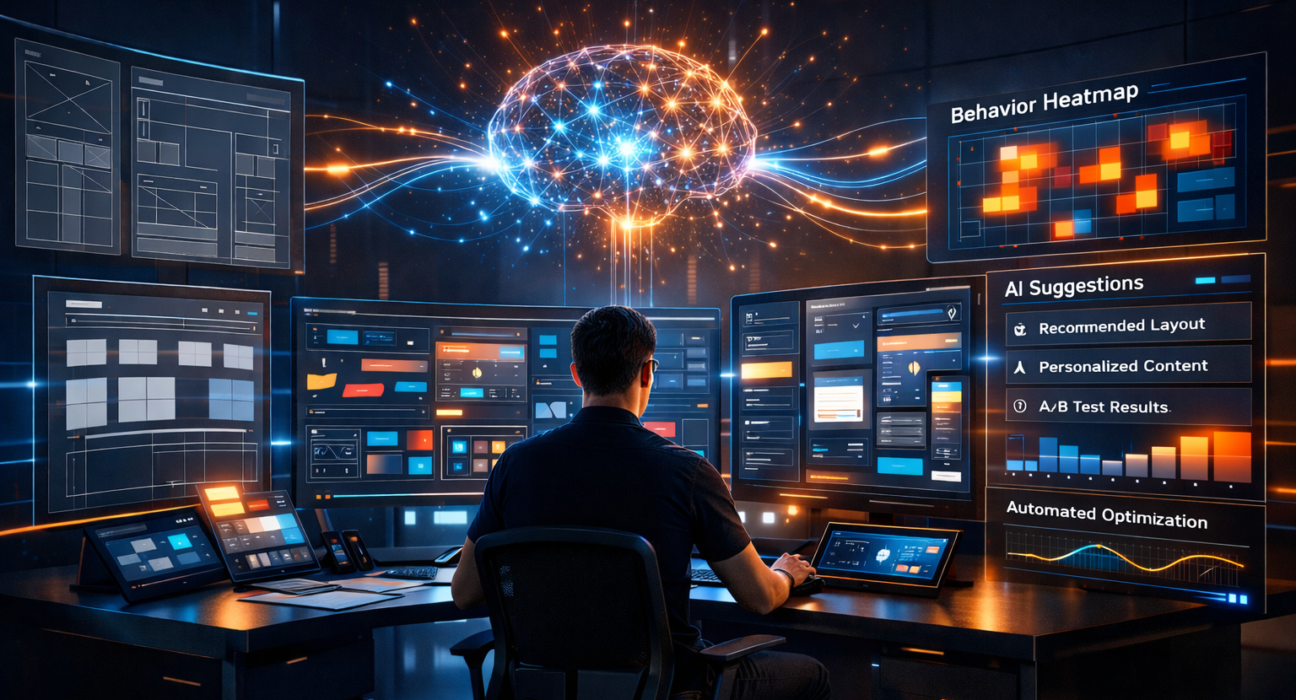
AI-augmented design uses artificial intelligence to enhance creativity, speed, and decision-making across the design lifecycle. Instead of manually creating every layout or variation, designers define intent, constraints, and experience goals while AI generates and optimizes the interface.
This enables teams to:
- Prototype ideas instantly
- Explore multiple creative directions
- Optimize usability with real-time insights
- Focus on strategy rather than repetitive execution
It’s not automation replacing creativity, it’s creativity amplified by intelligence.
Generative UI: From Screens to Systems
Generative UI represents a shift from designing fixed interfaces to designing rules and logic that generate interfaces dynamically.
What makes Gen UI powerful
- Text-to-UI: Convert product ideas into visual layouts instantly
- Context-aware interfaces: Adapt to user behavior and environment
- Continuous evolution: Improve automatically using usage data
This transforms design into a living system, one that evolves alongside users.
The “Living Workspace” Experience
Scenario
A global consulting firm wanted to reimagine its employee digital workspace. Their challenge wasn’t a lack of tools, it was cognitive overload. Employees logged into dozens of apps daily, each with different dashboards, notifications, and workflows.
Instead of redesigning yet another portal, the goal was ambitious:
Create a workspace that reconfigures itself every day based on what each employee needs to accomplish.
The Concept
As UI/UX specialist, we introduced a Generative UI-powered “Living Workspace.”
Rather than a static homepage, the interface behaves like a digital assistant that designs the workspace layout in real time.
How It Works
1. Intent-Driven Interface Generation
At the start of the day, the system analyzes:
- Calendar events
- Active projects
- Deadlines
- Collaboration patterns
It then generates a personalized workspace layout prioritizing the most relevant tools and information.
A consultant preparing for a client presentation sees analytics, slides, and meeting notes front and center. A project manager sees timelines, team updates, and risk alerts.
2. Adaptive Focus Modes
When users enter deep-work sessions, the interface automatically simplifies hiding non-essential widgets, muting notifications, and switching to a minimal layout optimized for focus.
3. Real-Time UI Evolution
If priorities change during the day, for example, a critical issue arises, the interface reorganizes itself to surface relevant workflows instantly.
The Experience
Employees described the product as:
“A workspace that understands how I work.”
Instead of navigating tools, the interface comes to them, reducing friction and cognitive load.
Results
- 40% reduction in time spent switching between tools
- Significant increase in task completion speed
- Higher employee satisfaction with digital tools
- Reduced training effort for new hires
Other High-Impact Applications
- Adaptive e-commerce storefronts that redesign layouts based on shopper intent
- Healthcare dashboards that surface patient insights based on clinical context
- Smart SaaS onboarding that generates tailored product tours
- Data platforms that restructure visualizations based on decision needs
Benefits of AI-Driven UI Design
- Faster innovation cycles
- Hyper-personalized user journeys
- Reduced design and development overhead
- Continuous experience optimization
- Stronger engagement and usability
Challenges to Navigate
To unlock full value, organizations must address:
- Governance and design consistency
- Ethical and transparent AI decisions
- Clear boundaries between automation and human creativity
The most successful teams treat AI as a co-designer, not a replacement.
The Future: Interfaces That Anticipate, Not React
As AI becomes more predictive and multimodal, digital experiences will shift from responsive to anticipatory.
Products will:
- Adapt before users ask
- Present the right information at the right moment
- Continuously learn from behavior
Designers will evolve into experience architects, shaping the logic that powers these intelligent systems.
Final Thoughts
AI-augmented design and Generative UI are redefining what it means to design digital products. By combining automation, data, and creativity, organizations can build experiences that are not only efficient but deeply intuitive and human-centric.
The shift is clear: the future of design isn’t static screens, it’s interfaces that think, learn, and evolve.
Bring Intelligent Design to Life
Turning Generative UI concepts into production-ready platforms requires deep expertise across design systems, AI, and engineering. Evvo Technology helps organizations design and deploy AI-powered experiences that are scalable, secure, and user-centric.
If you’re ready to create digital products that adapt to your users in real time, now is the moment to start.
Connect with Evvo Technology and build the next generation of intelligent experiences.