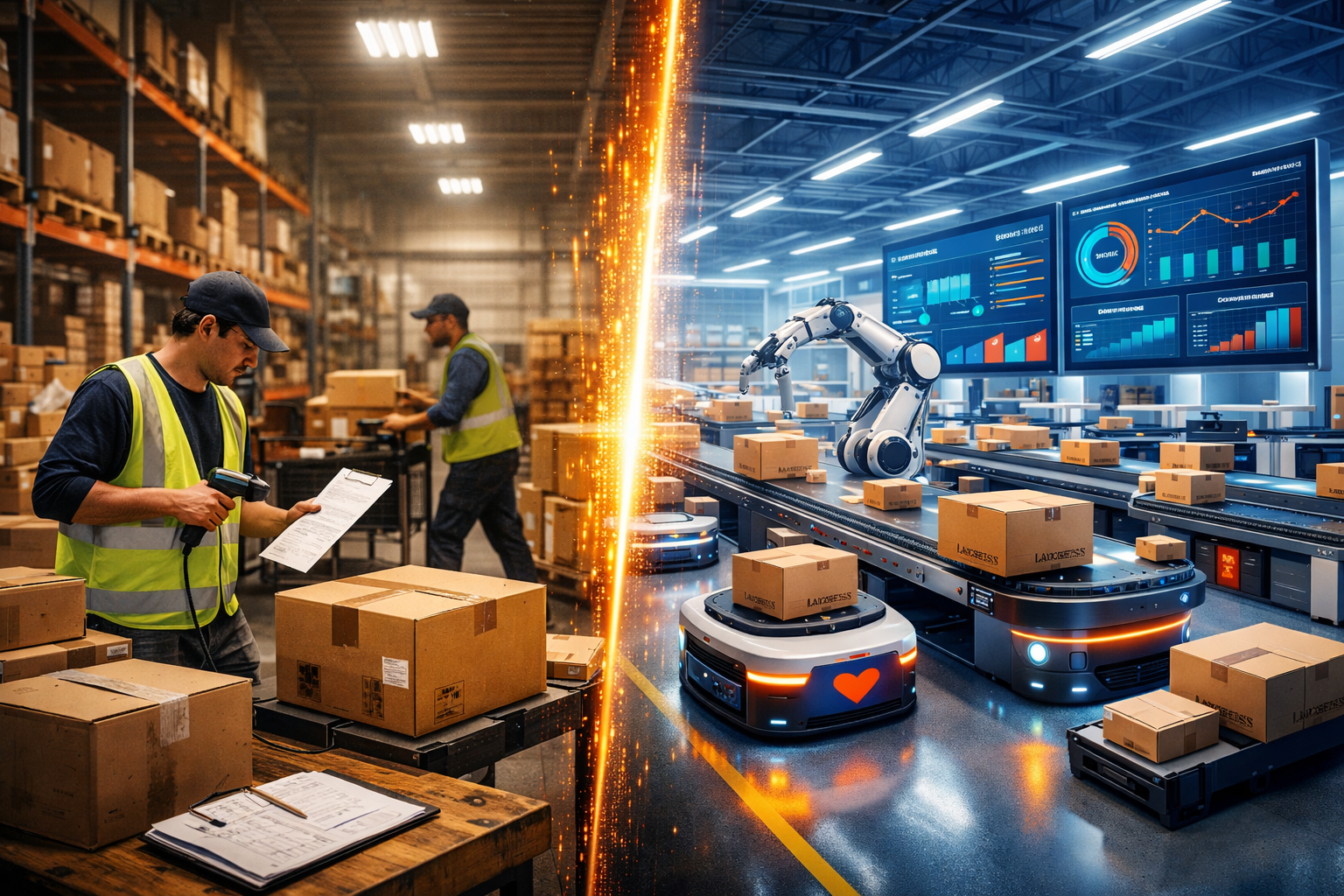

There’s a factory in Pune that used to shut down every night at 6 PM.
Not because the machines needed rest. Because the people monitoring them did.
Walk through that factory at 7 PM and you’d find humming equipment, spinning belts, blinking sensors and zero humans making decisions about any of it. The building was alive. The business was asleep.
Every morning, the operations team would file in, pour their chai, pull up overnight logs, flag anomalies, and sit in a meeting to decide what needed fixing. By the time decisions were made, approved, and handed off, half the day was already spent reacting to problems that were twelve hours old.
It worked. Sort of. The way a car with a slow puncture still gets you to the office, until it doesn’t.
Then they deployed an agentic AI system. And the first night it ran, it did something nobody had planned for.
At 2:14 AM, a conveyor belt in Bay 3 showed an irregular vibration pattern. Nothing alarming enough to trigger a human alert. Just the faintest signature of friction stress, the kind of signal that looks like noise if you don’t know what to look for. The AI knew what to look for.
In the next four minutes, it cross-referenced three months of maintenance history on that specific belt, checked the spare parts inventory, confirmed a compatible replacement was in stock, and automatically rescheduled a technician to arrive at 6:00 AM before the morning shift even started.
No one sent an email. No one called a supervisor. No one held a meeting. By the time the operations team walked through the door with their chai, the problem was already solved, documented, and filed.
That one event didn’t just save a breakdown. It changed how the entire organization thought about time.
Here’s what most businesses don’t realize: their biggest operational problem isn’t a lack of data or a lack of smart people. It’s the gap. The space between the moment insight is available and the moment action is taken. In most organizations, that gap is measured in hours. Sometimes days. Filled with reports, approvals, inboxes, and meetings where people discuss things that should have already been handled.
Traditional AI narrows that gap a little. It gives you better analysis faster. But someone still has to read the analysis, make a decision, send an email, and wait for a response.
Agentic AI removes the gap entirely.
It doesn’t respond to your questions. It sets its own goals, plans the steps to achieve them, uses whatever tools are available, checks whether its actions are working, and adjusts when they aren’t. All without being asked. All without stopping.
Think about what that actually means for a business operating at scale. Your supply chain detecting and rerouting around a vendor delay before your procurement team even knows there is one. Your customer support system resolving complaints, flagging patterns, and escalating only the genuinely complex cases at 3 AM on a Sunday. Your quality control layer catching a defect trend across a production line and tracing it back to a specific machine parameter before a single bad batch ships.
This isn’t science fiction. These systems exist. They’re running in factories and warehouses and contact centers right now. And the companies operating them aren’t just more efficient than their competitors, they’re playing a different game entirely.
Think of agentic AI less like a smart assistant and more like a capable, tireless colleague who works every hour of every day, never forgets a piece of context, and never needs to be told something twice. A colleague who doesn’t need a meeting to make a decision. Who doesn’t need to sleep to stay on top of things. Who doesn’t have a bad day, a distracted morning, or an overloaded inbox.
The factory in Pune didn’t just install new software. They hired someone who never clocks out.
The businesses that understand this early won’t just run better. They’ll be in a fundamentally different category, one where the competition is still holding morning meetings about problems that should have been fixed at 2:14 AM.
At Evvo Technology, we build agentic AI systems for Indian enterprises, not as demos or pilots that live in a PowerPoint, but as working systems embedded in real operations. If your business is still waking up to yesterday’s problems, it’s time to change that. Let’s talk.